
2026-05-19
Why Voice Journaling Is the Mental Health habit Your Brain Actually Needs
Research shows voice journaling reduces anxiety, stress, and depression symptoms and is easier to stick with than written journaling. Here's what the science says and how to start today.
You have tried journaling. Maybe multiple times. You bought the nice notebook. You set the daily reminder. And then it just stopped feeling natural.
The blank page stared back at you. Your thoughts felt jumbled. After a few days, the habit quietly faded.
Here's the thing nobody tells you. Most people who start a written journal quit within three weeks. The friction of putting pen to paper, organizing thoughts into sentences, staring at a cursor. That is enough to break it before it takes root.
But there is another way. One that is faster and more natural and, according to the research, might actually be better for your brain.
Enter: voice journaling.
The Research on Expressive Writing
The mental health benefits of expressive writing are not new. Researchers have studied this for decades. What is new is understanding how speaking versus typing changes the game.
A 2021 meta-analysis looked at 929 participants across eight randomized controlled trials. It confirmed that expressive writing significantly reduces symptoms of PTSD, anxiety, and depression. The key finding: writing about emotional experiences helps people organize traumatic or stressful events into coherent narratives. This reduces the intrusive thinking patterns that keep the brain stuck in stress mode.
Now here is something that stuck with me. Clinical research demonstrates that regular journaling can decrease cortisol levels by up to 23%. Cortisol is the primary stress hormone. When it is chronically elevated, it impairs memory, weakens immune function, and amplifies anxiety. Even a few minutes of journaling a day can move the needle.
A systematic review of 20 randomized controlled trials found that journaling interventions led to significant improvements in mental health symptoms. The impact on anxiety was more pronounced in women. That matters for our audience.
Why Voice Specifically
The research on voice journaling specifically is younger, but the early signals are strong. And when you pair it with what we know from neuroscience about how the brain processes spoken versus written language, the picture gets clearer.
When you speak, you engage the brain's limbic system more directly than when you type. Written language tends to get filtered through the prefrontal cortex, our rational, editing brain. That means spoken journaling often produces more raw, unfiltered emotional content, which is exactly what therapeutic journaling needs to be effective.
One Reddit user in r/mentalhealth described it this way after a year of voice journaling: "I used to freeze up when I tried to journal. With voice notes I just talk and it all comes out. Turns out I had a lot more to say than I thought."
The academic research is compelling, but what really brings this home is hearing from actual people who made this a daily habit.
From r/adhdwomen, a woman shared: "Voice journaling changed everything for me. I always felt like I was bad at journaling because I could never keep up with it. With voice notes I can do it while driving or making coffee. It doesn't feel like a chore."
From r/selfimprovement, someone who did four months of consistent voice journaling noted: "The biggest thing I noticed was that I stopped spiraling as much. When I go back and listen, I can see patterns like I always get anxious about work on Sunday nights. Knowing that has made me so much calmer."
From r/journaling, a popular comment that has resonated with thousands: "The difference between voice journaling and regular journaling for me is like the difference between texting a friend and having a conversation with them. One is curated, the other is real."
The Neurological Why
Researchers have begun explaining the mechanism more precisely. Expressive writing activates the prefrontal cortex while simultaneously reducing activity in the amygdala, the brain's threat detection system. This means that by writing or speaking about a stressful experience, you are essentially telling your brain it is safe to stop hypervigilating.
Regular practice also appears to build new neural pathways for processing emotion. The more you use it, the more automatic it becomes.
How to Start
You do not need an expensive app. You do not need a complicated system. But you do need two things: a low-friction method and a realistic starting point.
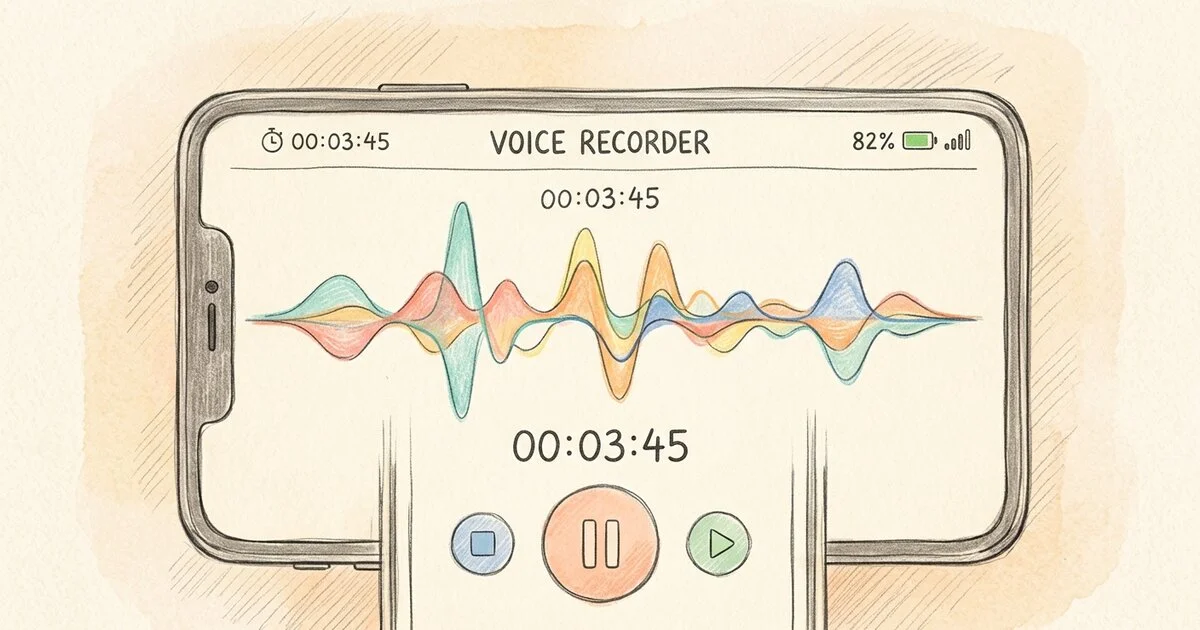
The 2-minute rule. Start by voice journaling for just two minutes a day. Open your phone's voice recorder, tap record, and say whatever is on your mind. Do not edit. Do not organize. Just talk. Two minutes is small enough that your brain will not resist it.
Choose a natural moment. The best time for voice journaling is the moment you realize you need to process something, not a prescribed hour on the calendar. Morning coffee, your commute, a walk. Wherever you already have quiet mental space.
Find a question that unlocks it. If you open the app and your mind goes blank, a simple prompt helps. "What is the one thing I need to let go of today?" or "What am I grateful for right now?" or "What is stressing me out?" Give your brain a door to walk through.
Use an app that does the work for you. If you want to see patterns over time, use an app that transcribes and summarizes your entries. The reflection and insight you get from reviewing a month of voice notes is genuinely different from reading back written words. You hear your own voice, your tone, your hesitations. That adds emotional dimension that text cannot capture.
A Note From the MyRuel Community
We built MyRuel specifically for women who want the mental health benefits of journaling without the friction of writing. Our app is voice-first, designed for the moments when you need to get thoughts out quickly and come back to them later. No blank pages. No perfect sentences required.
Try MyRuel free today and start your voice journaling practice in under five minutes. Your brain will thank you for it.
If you found this helpful, share it with a woman in your life who has tried and quit journaling before. The research is clear: the method matters, and voice might be the one that finally sticks.