
2026-06-01
The Science Behind Voice Journaling: Why Speaking Your Thoughts Heals More Than Writing
Research reveals that voice journaling reduces anxiety and boosts self-affirmation in ways written journaling cannot. Discover why women everywhere are switching to audio.
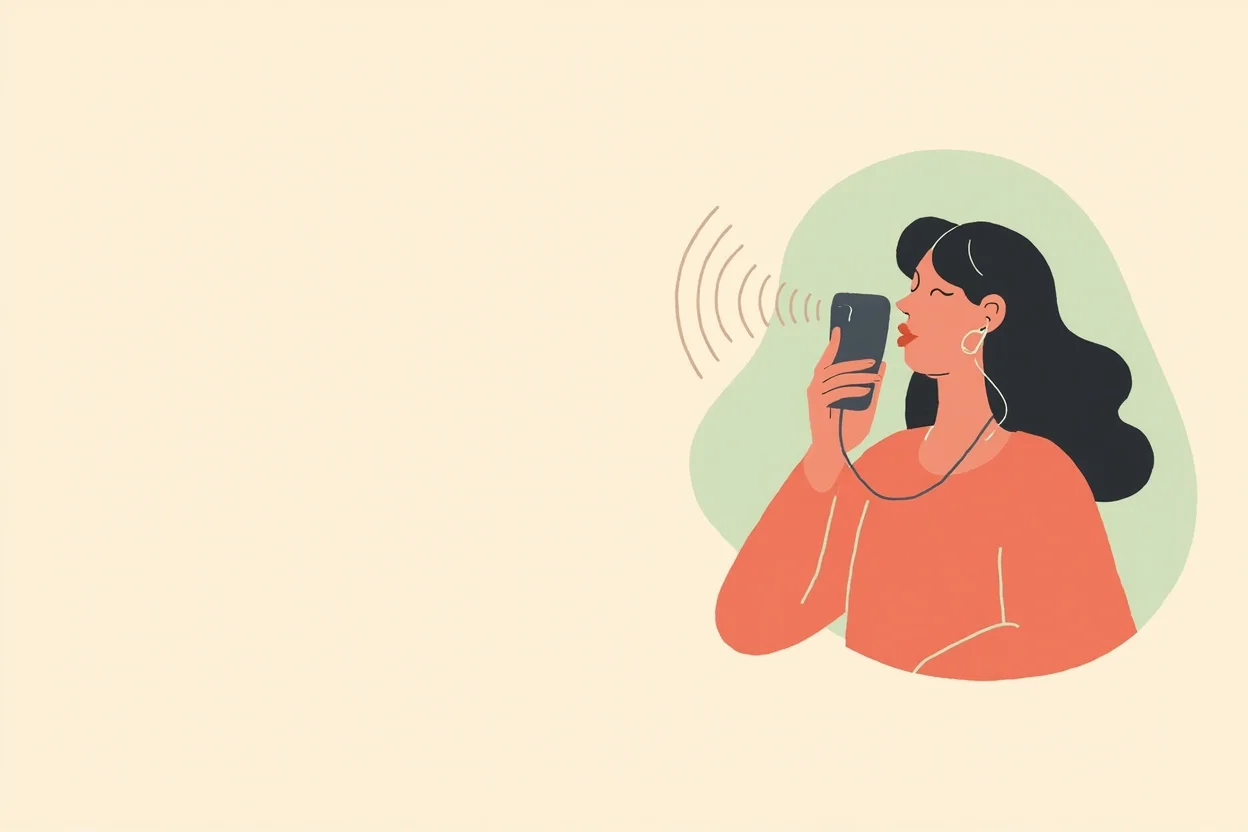
There's a moment every woman knows too well: you're overwhelmed, your mind is spinning, and someone says "just write it down." You try. You sit with a notebook and nothing comes. The thoughts feel too big for pen and paper. They need to come out of your mouth.
Science is now explaining why.
Voice journaling . speaking your thoughts aloud into a recording app rather than writing them . offers mental health benefits that traditional journaling can't match. For women navigating the mental load of modern life, that difference matters.
What the Research Actually Says
A 2018 study in JMIR Mental Health found that positive affect journaling was associated with significantly decreased mental distress. But the researchers noted something: the act of articulating emotions aloud appeared to deepen the psychological impact compared to silent writing.
Then in 2020, UCLA researchers developed a voice-analysis app that used AI to monitor well-being of people being treated for mental illness. The study found that an interactive voice application was effective for tracking wellness . because vocal patterns reveal emotional states that written text cannot. The voice doesn't lie.
Research published in PMC (2022) on self-affirmation theory found that actively verbalizing self-affirmations . saying them aloud rather than thinking them silently . reduced uncertainty aversion and improved performance under stress. Speaking the words creates a different cognitive and emotional pathway than reading or writing them.
Why Your Brain Prefers Audio
When you speak your thoughts, your brain activates more emotional processing centers than when you type or write. Your voice carries tone, pace, breath, and hesitation . all of which are data your brain uses to understand how you actually feel.
One Reddit user in r/Journaling put it simply: "Journaling isn't actually for your future self to read; it's a mental 'purge' because dead paper doesn't talk back."
That insight captures something deep. The act of speaking into the void . hearing your own voice process your life . is part of the healing.
Another user in r/TheGirlSurvivalGuide shared: "I always thought journalling/manifesting was dumb, but then I tried... I then write affirmations. I am lovable. I am creative. I am strong. I got this. This technique has seriously helped me structure my days." She discovered what many are now finding: voice makes the practice feel alive.
The Mental Health Case for Women
Women are more likely to experience anxiety and depression, yet they're also more likely to put their own mental wellness last. The mental load of managing a household, career, relationships, and personal goals creates a constant background hum of stress that written journaling often doesn't fully address.
Voice journaling removes friction in a way that changes everything. You can do it in the shower, in the car during your commute, or in bed before sleep. You don't need to find a pen, open a notebook, or sit in front of a glowing screen.
The moment you feel overwhelmed, you can speak . and in that speaking, you begin to release.
Research shared in r/adhdwomen reflects this: "Progress not perfection" . a mantra many women use to remind themselves that showing up imperfectly still counts. Voice journaling lets you show up imperfectly, in the moment, without judgment.
How to Start
You don't need a special device. You need a practice.
Pick a time. Many women find morning voice journaling sets a calm tone for the day. Others prefer evening to process what happened. Experiment with both and notice how you feel.
Start with one prompt. "What am I feeling right now?" Speak for two minutes without stopping. Don't edit. Don't judge. Just let the words flow.
Add affirmations. After processing, speak one or two positive statements aloud. "I am capable. I am growing. I am enough." Research suggests this reinforces the self-affirmation pathway in your brain.
Listen back occasionally. Hearing yourself acknowledge your own growth is powerful. It shows you how far you've come.
The MyRuel Approach
At MyRuel, we built voice journaling with women's wellness in mind. Our app combines voice journaling with daily affirmations, so you process your thoughts and feed your mind in one session.
We believe mental wellness shouldn't require a complicated system. Just open the app, speak, and affirm.
Research cited: JMIR Mental Health (2018), UCLA Newsroom (2020), PMC Self-Affirmation Study (2022). This post is for informational purposes and does not constitute medical advice.