
2026-08-17
The 2 AM Replay
I have a library of replays. The conversation from Tuesday. The email that got one word back. The thing I said in 2019 that nobody remembers.
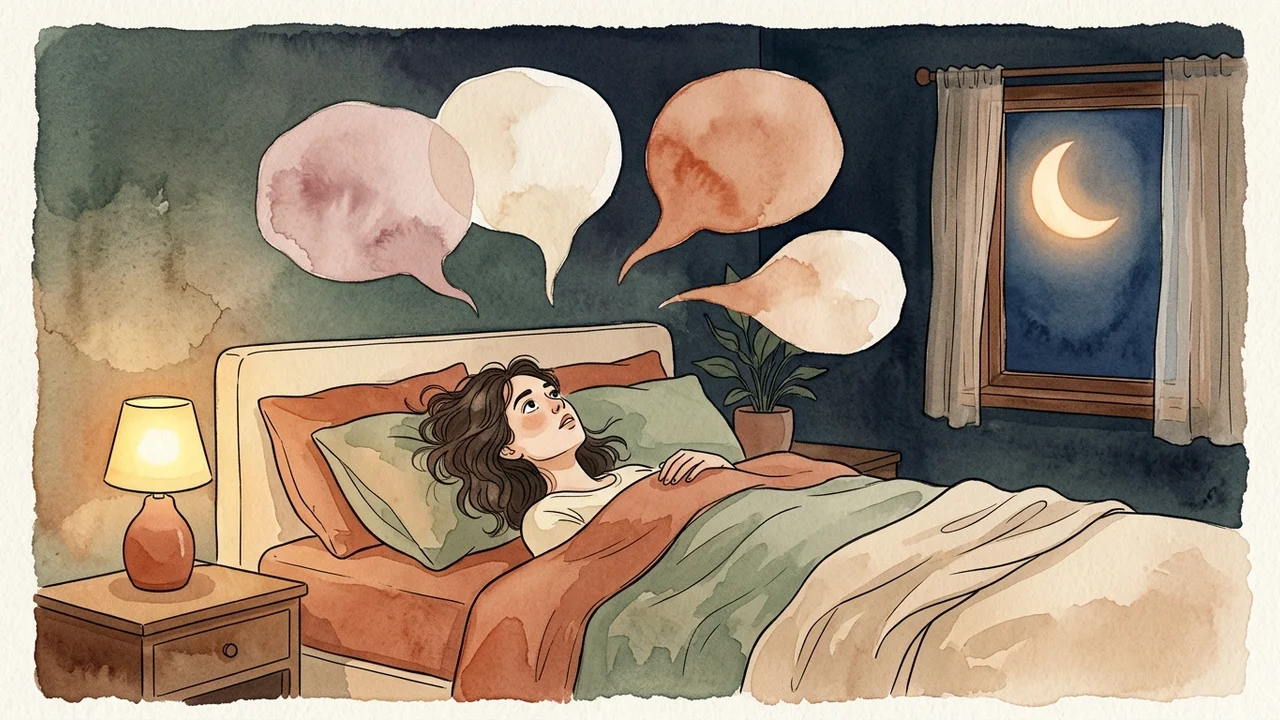
I have a library of replays. The conversation from Tuesday. The email that got one word back. The thing I said in 2019 that nobody remembers. Also the group chat I over-analyzed last month, for variety.
My brain queues them at night. Usually around 1 AM, right when I should be falling asleep, the reel of my worst moments starts. I watch myself say the wrong thing again. I watch the other person's face. I feel the heat in my chest, freshly, as if it happened five minutes ago instead of five years.
This is the part of my head that voice journaling has been quietly fixing, and I didn't notice until recently.
What the replay actually is
Psychologists call this post-event processing, and it shows up most in social anxiety research. The definition is simple: replaying a social interaction after it's over, analyzing it, searching for what went wrong. The replay feels like problem-solving. It's not. It's a loop dressed as problem-solving.
Watkins and Roberts (2020) reviewed the current state of rumination research in the Journal of Experimental Psychopathology. Their summary is blunt: rumination is repetitive negative thinking, and it's a risk factor for depression and anxiety, not just a side effect of them. The thinking doesn't come after the bad mood. It's part of what creates the bad mood, and then it keeps the mood alive.
That reframing changed how I think about my 2 AM sessions. I always treated them as my brain being thorough. Checking the footage. Running the analysis. The evidence suggests my brain wasn't solving anything. It was rehearsing.
Why it's always at night
The replay doesn't run at 3 PM, when I'm busy and distracted. It runs at night, when the day is over and the room is quiet. I used to think the quiet was the problem. There's more to it.
Tempesta and colleagues (2018) reviewed the evidence on sleep and emotional processing in Sleep Medicine Reviews. The conclusion: sleep loss amplifies emotional reactivity and leaves negative memories feeling more intense. A tired brain is worse at keeping a bad moment in perspective, and a bad moment that was already sticky gets stickier overnight.
So the replay isn't just finding me at night. The night is making the replay worse. I'm replaying the conversation with an emotional system that's worn out, and then I'm storing the worst version of it, which becomes the version I replay tomorrow. The loop compounds.
The detail that keeps it alive
Here's the part I find hardest to admit. The replay always has a specific detail. The pause before they answered. The way I said "yeah" too fast. The exact wording of the sentence I wish I hadn't said. The face they made, or the face I think they made.
The detail is what makes the replay feel important. It feels like evidence, like I'm finding the exact frame where it went wrong. And if I can find the exact frame, maybe I can do it differently next time.
That's the trap. The detail isn't evidence of anything except how much attention I gave it. The other person isn't replaying my pause. They're asleep, or doing their own 2019 replay. Nobody else is running this footage. It's a screening with an audience of one, and the only person in the theater is the one getting hurt.
Saying it out loud breaks the frame
This is where voice journaling does something I didn't expect.
Last week I had a replay going. A short work conversation where I'd been too quiet, then too loud, and I was sure I'd come across wrong. I recorded it. Not the story of the conversation. The replay itself, the whole spiral, including the close-up details.
And here's the thing. Out loud, the spiral sounded thin. "I said the thing too fast, and now she probably thinks I'm aggressive, and I'll be known as the aggressive one forever." Speaking turned the drama into a sequence of words I could actually hear, and hearing it made the jump from "said a thing fast" to "known as aggressive forever" visible as a jump. A gap you can hear.
There's research behind this. Torre and Lieberman (2018) reviewed the affect labeling literature in Emotion Review. Putting feelings into words, and especially speaking them out loud, dampens the emotional response. The process forces a vague, enormous feeling into a specific, bounded sentence, and a specific sentence is harder to drown in.
Writing does some of this too. But writing lets me keep the spiral tidy. I can write the version of the thought that still sounds reasonable. Speaking is harder to edit mid-stream. The unreasonable part comes out anyway, and that's the part that needs to be heard.
What I do with the replay now
I'm not going to tell you I've stopped replaying. I replay. Probably I always will, some nights.
But I've stopped replaying silently. When the tape starts, I have a rule. Say it out loud, once, in one go, as messy as it comes. Then ask the question that matters: what would I actually do differently, concretely, if the same thing happened tomorrow?
Sometimes the answer is real. Slow down. Say the thing earlier. Sometimes the answer is "nothing, it was fine." Both answers end the replay, which is more than the replay ever does for me.
The replay is a habit. It got built one night at a time, and it can get unbuilt the same way. Not by winning an argument with it. By turning it into sound, once, and letting the sound be smaller than the feeling.
So here's my question for you. What's the conversation your brain plays most often at night, and what does it sound like when you say it out loud, start to finish, without editing?